Key Accessory for Roof Fastening: EPDM Bonded Washers to Solve Leakage Issues of Metal Roofing
From recent steel structure roof renovation projects, we have summarized a common industry problem: most metal roof leakage issues are not caused by damaged panels or poor construction, but by incorrect gasket selection and mismatched accessories with self-drilling screws. Many newly built roofs develop water seepage, rubber cracking and peeling within only 1–2 years of service, leading to repeated rainy-season leakage and high maintenance costs. Specially matched with roofing self-drilling screws, high-temperature vulcanized EPDM bonded washers provide a reliable long-term waterproof solution to eliminate screw-point leakage on steel roofs.
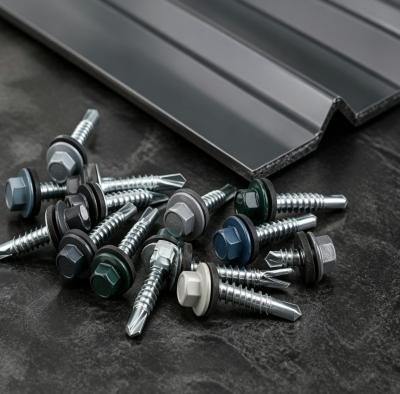
EPDM Bonded Washers are dedicated sealing accessories matched with hex-head roofing self-drilling screws, forming a standardized fastening and sealing combination for metal roof construction. The one-piece vulcanized structure requires no additional rubber gaskets and perfectly adapts to the integrated drilling, tapping and locking process of self-drilling screws. Compatible with single-layer color steel tiles, double-layer thermal insulation sandwich panels and galvanized steel enclosure sheets, it is widely used in outdoor steel structure projects such as steel workshops, warehouses, photovoltaic roofs, greenhouses and sunrooms. It targets high water-leakage positions including roof panel joints, screw fixing points, ridges and eaves. When locked with self-drilling screws, it effectively seals gaps between panels and drill holes, solving roof leakage problems caused by bare screw installation, poor gasket compatibility, aging and loosening, ensuring long-term outdoor waterproof fastening performance for steel roofs.
1. Key Advantages
1.1 Integrated bonded construction: Metal washer and EPDM rubber are vulcanized as one unit. The rubber will not peel off or shift during installation, and no separate loose rubber gasket is required.
1.2 Superior weather and ageing resistance: EPDM rubber withstands UV exposure and wide temperature fluctuations. It resists hardening and cracking under long-term outdoor exposure.
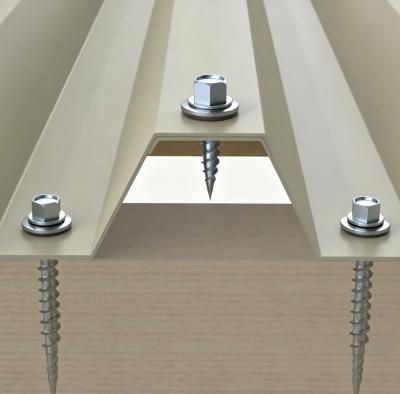
1.3 Excellent compression recovery: The rubber compresses evenly under screw torque, closely conforming to corrugated metal profiles and sealing tiny gaps against rainwater ingress.
1.4 Corrosion-resistant metal backing: The treated metal substrate works with roofing self-drilling screws to reduce secondary leakage risks caused by contact-surface rust.
2. Typical Applications
- Fastening & sealing for corrugated roofs of steel workshops and warehouses
- Supporting photovoltaic roofs, prefabricated buildings and sunroom metal cladding
- Agricultural greenhouses and outdoor metal sheet enclosures
- Critical leak-prone positions: roof ridges, eaves, panel overlaps and photovoltaic mounting bases
3. On-site Installation Guidelines
3.1 Always use washers as a complete set with matched roofing self-drilling screws. Never disassemble the unit to avoid sealing failure.
3.2 Verify bore diameter and head-fit dimension to prevent leakage risks from oversized holes.
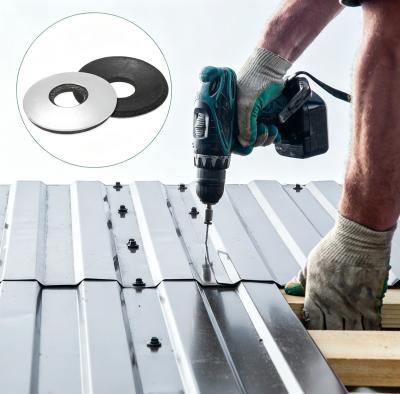
3.3 Apply proper tightening torque. Over-torquing crushes EPDM rubber and ruins its resilient sealing property.
3.4 Keep washers fully flat against panels. Tilted or lifted washers will result in immediate leakage.
3.5 Reuse after disassembly is not allowed. Compressed EPDM loses resilience and sealing performance.
4. Real Project Case
Many steel-structure contractors reported similar failures: partial water seepage occurs on new factory roofs merely 1-2 years after completion. On-site inspection confirms leakage originates from low-grade ordinary gaskets instead of panel damage. Low-cost gaskets have poor weather resistance. Under sun exposure, temperature swings and rain erosion, rubber hardens and cracks, creating seepage around screw holes. During renovation, all old gaskets were replaced with high-temperature vulcanized bonded EPDM washers, fully matched with roofing self-drilling screws. After one full-year test including rainy seasons and temperature fluctuations, former leaking spots stay completely waterproof.
Most roof leaks come from poor gasket selection and mismatched accessories rather than construction defects. Small sealing components determine the whole roof system’s waterproof service life. Roof repair costs are far higher than component purchasing cost. Choose matched fastener-washer sets to eliminate leakage risks at source.