Electroplated vs Electroless Nickel: Why Your Screws Get Stuck & Gall
Nickel coating is a widely used surface finishing option for fasteners. Many overseas buyers mix up electroplated nickel and electroless nickel. Though both form nickel protective layers, their deposition principles are totally different, leading to big gaps in coating uniformity, hardness, thread fitting performance and cost. Especially for precision threaded fasteners, deep-hole and shaft parts, wrong finishing will easily cause thread jamming and galling, slowing down assembly work.
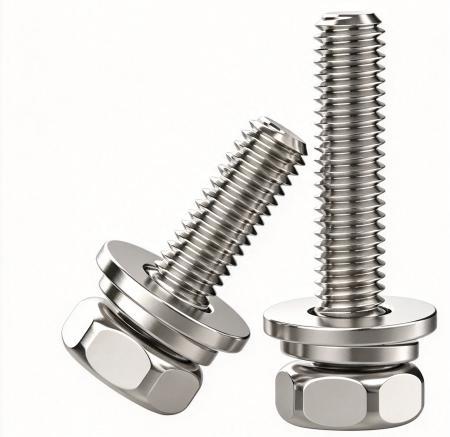
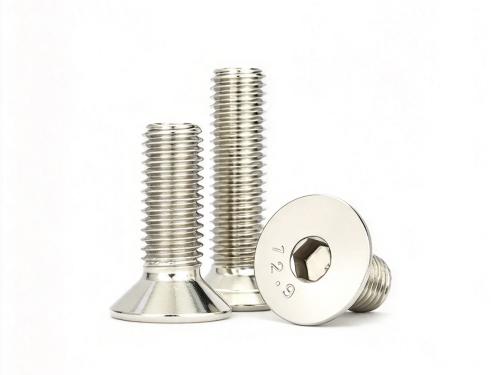
1. Coating Uniformity (Critical for Threaded Parts)
- Electroplated Nickel: Deposited by electric current. The coating builds thicker on edges and thread crests, while thread roots and inner holes get thinner coverage. Excess nickel builds up on thread tips, shifting the pitch diameter and reducing thread clearance, which frequently causes sticking and galling during assembly.
- Electroless Nickel: Deposited via autocatalytic chemical reaction without electricity. When immersed in solution, every surface gets consistent coating thickness. Uniform coverage on thread crest, flank, root and deep bores with tight thickness tolerance, which helps maintain precise thread fit.
✅ Buyer Tip: For precision threads requiring GO/NO-GO gauge inspection, electroless nickel is recommended. If electroplated nickel is selected, pitch diameter change caused by coating thickness must be reviewed in advance.
2. Composition & Hardness
- Electroplated Nickel: Pure nickel deposit with low hardness and soft texture. It features bright mirror finish for decoration and basic rust protection, with limited wear resistance.
- Electroless Nickel: Nickel-phosphorus alloy coating with much higher hardness and superior wear & corrosion resistance. Hardness can be further improved after heat treatment, ideal for friction-heavy and high-corrosion applications.
3. Cost & Appearance
- Electroplated Nickel: Low chemical cost and fast processing speed, cost-effective for mass orders. Bright mirror surface for decorative hardware.
- Electroless Nickel: Expensive bath chemistry and longer cycle time, higher processing cost. Matte satin finish instead of high-gloss appearance.
4. Recommended Applications
✅ Electroplated Nickel: Decorative parts, simple general hardware, high-volume cost-sensitive projects, fasteners without strict thread tolerance or repeated disassembly.
✅ Electroless Nickel: Precision fasteners, fine threads, deep bore components, shaft parts, applications requiring wear resistance and stable dimensional tolerance.
5. Key Reminder for Fastener Buyers (Thread Galling Risk)
Electroplated nickel fasteners are more prone to galling and jamming. Built-up coating on thread crests enlarges the actual thread pitch diameter and cuts down fitting clearance, making screws hard to thread in. Electroless nickel greatly lowers galling risk with even coating. But blank thread diameter must be pre-machined smaller to reserve coating allowance. Without pre-undercut, even electroless nickel screws will get stuck during assembly.
6.Conclusion
Neither electroplated nickel nor electroless nickel is universally better. Choose electroplated nickel for low cost and bright appearance; choose electroless nickel for precise thread fit, wear resistance and deep-hole components. Jiaxing Aoke Hardware supplies fasteners with electroplated nickel, electroless nickel and other surface treatments. We review drawings based on your thread gauge, corrosion and wear requirements, pre-set blank allowance to avoid assembly jamming. Send your drawings for samples and quotation.