How to Control Tightening Torque for Instrument Threads?
In engineering sites such as chemical, thermal power and automation instrument projects, pipeline sealing failure is a frequent fault. The tightening torque of industrial fasteners is the core factor that determines the long-term stable operation of instrument pipelines. Excessive torque will easily cause thread slipping and cracking of fitting bodies; insufficient torque will lead to medium leakage, resulting in shutdown maintenance and even major potential safety hazards.Among these pipelines, the most inconspicuous yet failure-prone components fall under the category of Industrial Fasteners: precision instrument thread fittings.
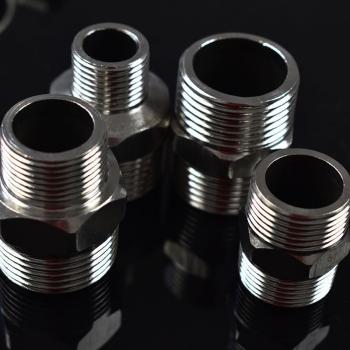
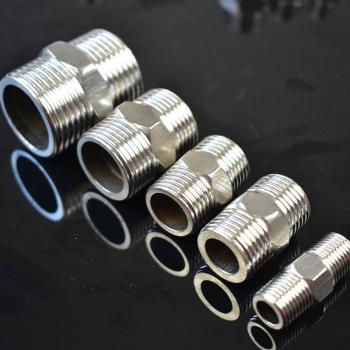
Insufficient torque causes slow leakage; excessive torque brings burst risks:
With low tightening torque, the sealing face of threads and gaskets cannot be fully compressed. After equipment startup, micro-leakage which is invisible to naked eyes will occur at joints under cyclic fluctuations of temperature and pressure. The high-pressure medium and corrosive gas inside impulse pipes seep out gradually. In mild cases, instrument readings become distorted, and teams repeatedly carry out leak repairs. In severe cases, liquid accumulates at flange roots and corrodes surrounding cable trays and wires, even triggering leakage alarms for flammable media.
Excessive torque is more hazardous. Instrument fittings feature thin walls and small thread minor diameters, especially fine-thread types like M10 and M12. If force is applied beyond the yield strength, micro-cracks will form at the thread root. When equipment heats up and pressure rises, cracks expand and the fitting body ruptures directly. High-pressure process medium spurts out instantly, which may damage adjacent instruments or burn operators. It is a typical "minor part, major accident" hazard on site.
Recommended Tightening Torque for Each Instrument Thread Specification
Precondition: Stainless steel / copper instrument fittings + copper or aluminum gaskets + dedicated thread sealant; normal temperature and pressure working conditions; intact threads and clean sealing surfaces
|
Thread Spec |
Recommended Torque |
Typical Application |
Risk Reminder |
|
M10×1 (Fine Thread) |
8~12 N·m |
Small pressure transmitters, differential pressure switches, sensor impulse fittings |
Small thread minor diameter. Never extend the wrench for extra force, thread stripping may easily occur |
|
M12×1.5 |
12~18 N·m |
Ordinary pressure gauges, general joints for local pressure transmitters |
Widely used on industrial sites. Torque wrench is mandatory |
|
G1/4, NPT1/4 |
10~15 N·m |
Small-bore impulse tubes, capillary tubes, diaphragm pressure gauge fittings |
Over-tightening of NPT taper threads easily causes root cracking. Do NOT "tighten fully then back half a turn" |
|
G1/2, NPT1/2 |
18~25 N·m |
Main impulse pipelines in chemical and power plants, primary transmitter fittings |
High-frequency application, priority item for torque management |
|
G3/4 |
28~35 N·m |
Large-flow instrument pipelines, flow tapping components |
Larger sealing contact surface, heavy-duty torque wrench required |
5-step Assembly Procedure (to be used with the torque table)
1. Pre-inspection: Check threads for burrs and scratches, confirm gaskets have no indentation and sealing surfaces stay scratch-free. Scrap defective parts instead of forced assembly.
2. Pre-tightening: Screw in manually for 3~5 turns, ensure smooth thread engagement without jamming. Stop immediately and re-start if cross-threading happens.
3. Torque-controlled Tightening: Use calibrated torque wrenches, reach the target value gradually in 2~3 stages rather than one sudden pull.
4. Marking: Draw alignment marks between nut and fitting body after tightening. Inspectors can quickly identify loosening during routine patrols.
5. Re-tightening: Perform torque recheck 72 hours after equipment heat-up and pressurization, to eliminate preload attenuation caused by thermal expansion.
Important Boundary Notes
- This table is a general reference under normal temperature and conventional working conditions. For high temperature (≥300℃), heavy corrosion, ultra-high pressure (≥Class 2500), special alloy materials (Inconel, Hastelloy, Monel) and other special working conditions, always follow the technical documents from equipment or gasket manufacturers.
- Apply a thin layer of sealant only on the working thread surface. Excess sealant will be squeezed into impulse tubes and block the damping hole of transmitters, leading to delayed readings.
- Copper and aluminum fittings cannot share torque values with stainless steel fittings — torque values shall be reduced by about 20% for softer copper joints.Supporting Products We SupplyAs a supplier focusing on industrial fasteners and instrument pipeline connection parts, we can provide full supporting products:
- Full range of stainless steel / brass instrument fittings (ferrule type, welded type, straight through, bulkhead fittings)
- High-temperature alloy studs and nuts such as A193-B7 / A320-B8, flat washers
- PTFE / graphite spiral wound gaskets, copper gaskets and dedicated thread sealant
- Custom non-standard lengths, special materials and custom thread specifications with small-batch customization available. Material Test Reports (MTR) are supplied together with shipments.
Jiaxing Aoke Trading supplies a full range of industrial fasteners, including various instrument thread fittings, flange connectors, metric / imperial threaded bolts and nuts, with materials covering carbon steel, stainless steel and alloy steel. We not only provide off-the-shelf standard fasteners, but also offer material selection and thread assembly technical support according to customers' project working conditions. We provide one-stop fastener supporting solutions for automation, chemical and thermal power projects, covering parts supply and on-site assembly technical guidance to fully guarantee the stable operation of project pipeline systems.