Potential Risks of Hastelloy C‑276 Fasteners Machined from Bar Stock under Corrosive Service Conditions
In working conditions exposed to mixed acid and chloride ions, such as chemical plants, flue gas desulfurization facilities and offshore equipment, conventional stainless steel fasteners cannot guarantee long-term stable service. Hastelloy C‑276 (UNS N10276), a nickel‑molybdenum‑chromium alloy, serves as a highly reliable hardware option for such harsh environments.
Hastelloy C‑276 is a low-carbon nickel‑chromium‑molybdenum‑tungsten corrosion-resistant alloy. With outstanding resistance to pitting corrosion, crevice corrosion and stress corrosion cracking, it is widely adopted for flange connection assemblies in chemical installations, flue gas desulfurization systems and salt-laden corrosive environments. Typical products include bar-machined bolts and sheet-stamped gaskets. C‑276 features a high work-hardening rate, and residual stress tends to accumulate easily during cold working. Thread galling and seizure often occur when assembling components of the same alloy grade. Full-process process control directly determines the corrosion resistance of finished products.
We recently completed delivery of a batch of Hastelloy C‑276 components, including custom machined bolts from solid bar stock and matching gaskets. Even with high-quality nickel-base alloy raw materials selected, the in-service performance of finished products still heavily depends on material traceability, machining process control and surface treatment procedures.
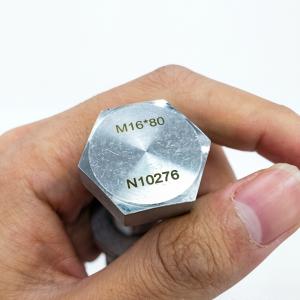
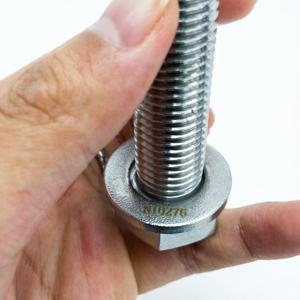
Project reviews reveal that most on-site failure risks stem from technical omissions at the inquiry stage: drawings merely mark the material as Hastelloy C‑276 without specifying supporting requirements for manufacturing processes, inspection and surface treatment, which may eventually lead to premature failure of workpieces under corrosive conditions.
1.Risk of material traceability
Grade marking on parts does not guarantee authentic material composition. Raw Material Test Certificates (MTC) and Positive Material Identification (PMI) inspection are essential to avoid material mixing. Without such documentation, components are prone to premature failure in corrosive media.
2.Hidden residual stress risks induced by machining
Heavy stock removal machining of solid C‑276 bar creates residual stress inside components. Improper residual stress control may result in dimensional deviation after machining and increase the risk of stress corrosion cracking under corrosive operating conditions.
3.Performance differences caused by different manufacturing routes
The C‑276 bolts for this project are fully machined from solid bar stock. Matching gaskets and certain non-standard parts can be manufactured by stamping to optimize costs. Nevertheless, blank flatness, surface quality and residual stress must be strictly controlled prior to secondary processing, since any defects in blanks will be inherited by finished products.
4.Risk of thread galling and seizure during assembly
Nickel alloy threads are highly susceptible to galling under high tightening torque. Thread surface finish, tolerances and anti-seize recommendations shall be confirmed in the early project phase. Compliance with dimensional tolerances alone cannot guarantee smooth assembly.
5.Risk of inconsistent surface treatment
Dedicated process parameters are required for pickling and passivation of Hastelloy C‑276. Improper surface treatment may leave contaminants or form an uneven passive film, weakening local corrosion resistance of components.
To mitigate the above risks, we have compiled a supporting quality control checklist for custom Hastelloy C‑276 fastener projects for reference:
• Applicable material standard: ASTM B574 / UNS N10276
• Mandatory provision of raw material MTC and PMI test reports
• Clear definition of manufacturing route: bar machining or stamping blank solution
• Requirements for residual stress relief for heavily machined components
• Specifications for thread tolerances, surface finish and anti-seize assembly guidelines
• Technical requirements for pickling and passivation surface treatment
• Complete documentation for full batch traceability
As a professional fastener supplier, we translate project anti-corrosion requirements into implementable production standards. If you are sourcing UNS N10276 bar-machined bolts and matching alloy sealing gaskets for severe corrosive service, please contact our technical team for solutions and quotations.