Recurring Tensions in the Strait of Hormuz|Logistics Selection Reference for Industrial Fastener Exports to Europe
Recent geopolitical turbulence in the Middle East has disrupted global shipping. As a critical global energy chokepoint, the Strait of Hormuz sees fluctuating navigation stability, driving volatility in fuel prices and marine insurance surcharges, which are directly passed into logistics costs for Chinese fastener exports. Only a handful of carriers have resumed trial operations on the Red Sea‑Suez Canal route, while most shipping lines maintain diversion plans. The Red Sea shipping crisis is far from fully resolved, bringing massive uncertainty to delivery schedules for Chinese‑manufactured industrial fasteners bound for Europe and the Middle East.
In cooperation with our manufacturing partner Jiaxing Aoke Hardware, Jiaxing Aoke Trading draws practical insights from numerous export shipments of custom non‑standard fasteners. We compare three mainstream transport options: Red Sea sea freight via the Suez Canal, sea freight detour around the Cape of Good Hope, and China‑Europe Railway Express. Lead time, cost, risks and applicable cargo are analysed to deliver actionable reference for overseas customers on production scheduling and shipment planning.
1.Red Sea Route (via Suez Canal)
This is the traditional shortest sea lane between Asia and Europe, with standard door‑to‑door transit of 28‑35 days. A small number of shipping lines have partially resumed Red Sea voyages; nevertheless, security threats persist around the Bab‑el‑Mandeb Strait. War‑risk surcharges remain high, available container space is limited, and sudden service suspension remains a possibility.
- Advantages: Shortest voyage and theoretically lowest ocean freight.
- Risks: Recurring geopolitical conflicts may trigger sudden suspension; not suitable for orders with zero tolerance for delivery delays.
- Suitable for: Bulk standard fastener orders that can accept flexible lead‑times.
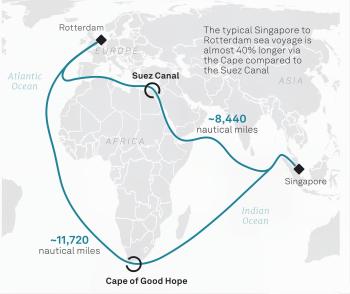
2.Sea Freight Detour around the Cape of Good Hope
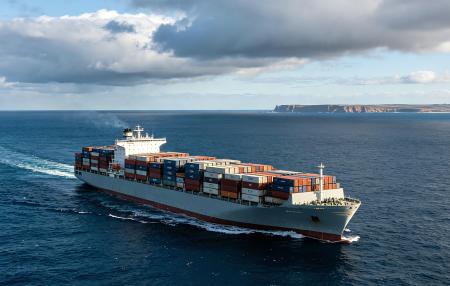
This route avoids high‑risk Red Sea waters, yet extends total transit duration by 10‑14 days to 42‑54 days, accompanied by higher fuel and overall logistics expenditure.
- Advantages: Relatively abundant container space, capable of handling large‑volume full‑container shipments.
- Risks: Extended transit creates greater pressure on inventory turnover.
- Suitable for: Large‑volume general fasteners such as standard bolts and nuts with flexible delivery timelines.
3.China‑Europe Railway Express (Overland Corridor)
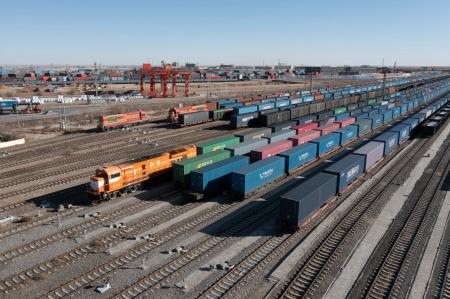
This land route completely bypasses maritime geopolitical risks across the Strait of Hormuz and Red Sea, offering stable scheduled service with door‑to‑door transit of 16‑25 days. In recent years, inquiries for urgent fastener replenishment and non‑standard urgent orders have kept rising, making rail freight a vital backup solution to guarantee delivery of industrial components.
- Advantages: Reliable transit time, insulated from maritime attack risks.
- Risks: Per‑container cost is higher than conventional direct Red Sea ocean freight.
- Suitable for: Custom non‑standard fasteners, urgent high‑strength bolt orders and production‑line restocking orders.
Situation Summary: Energy‑market volatility originating from the Strait of Hormuz pushes up global comprehensive shipping costs. Red Sea direct services remain tentative with non‑negligible risks. The Cape of Good Hope detour fits large‑volume, slow‑moving cargo, whereas China‑Europe Railway Express acts as a key alternative to secure continuous fastener supply.
As an experienced fastener foreign‑trade trader, Jiaxing Aoke Trading leverages the production capacity of Jiaxing Aoke Hardware. Whether you require regular standard parts, drawing‑based custom non‑standard fasteners, high‑strength bolts or one‑stop fastener sourcing service, we can match optimal sea‑rail shipment combinations aligned with your project budget and delivery requirements. We help minimise delivery delays caused by the Red Sea shipping crisis, and utilise diversified logistics including China‑Europe Railway Express to keep our overseas clients’ production lines running steadily.