What Should Buyers Consider When Purchasing Stainless Steel Fasteners?
Stainless steel fasteners are widely used in industrial machinery, automotive components, construction, marine equipment, and various manufacturing applications. Their corrosion resistance, durability, and mechanical properties make them an important choice for many industrial connections.
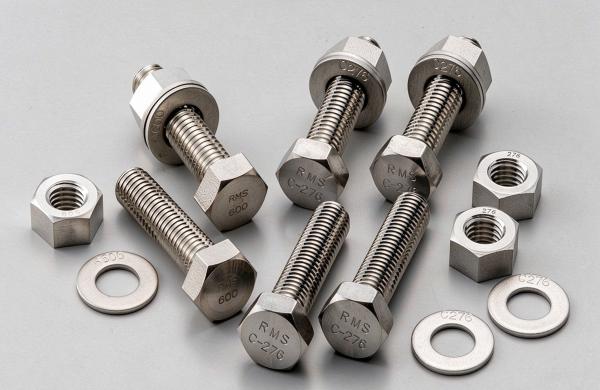
However, purchasing stainless steel fasteners involves more than simply selecting screws, bolts, or nuts based on their appearance or price. Different applications require different material grades, dimensions, thread specifications, mechanical properties, and surface conditions.
For overseas buyers, choosing the wrong fasteners may lead to installation problems, premature corrosion, connection failure, or unnecessary procurement costs.
So, what should you check before purchasing stainless steel fasteners?
1. Material Grade: Choose the Right Stainless Steel
Different stainless steel grades offer different levels of corrosion resistance, strength, and temperature performance.
Common stainless steel grades include:
- 304 Stainless Steel: Offers good general corrosion resistance and is widely used in machinery, household appliances, and general industrial applications.
- 316 Stainless Steel: Contains molybdenum, providing better resistance to pitting and crevice corrosion in chloride-containing environments. It is commonly used in marine, coastal, and chemical-related applications.
- 410 Stainless Steel: A martensitic stainless steel with higher hardness and strength potential after heat treatment, suitable for certain applications requiring wear resistance.
- A4 Stainless Steel: A commonly used fastener material designation under ISO 3506, generally associated with molybdenum-containing stainless steel grades.
2. Product Dimensions and Specifications
Accurate dimensions are essential for proper installation and assembly.
Even small dimensional differences may affect component compatibility, fastening performance, and production efficiency.
Important specifications include:
- Nominal diameter.
- Overall length.
- Head type and head dimensions.
- Thread pitch.
- Thread length.
- Shank diameter.
- Nut and washer dimensions.
For customized fasteners, buyers should provide detailed technical drawings or physical samples whenever possible.
Clear specifications help suppliers understand the requirements and reduce errors during production and inspection.
3. Thread Type and Standards
Thread compatibility is another critical consideration when sourcing stainless steel fasteners.
Different countries and industries may use different thread systems.
Common thread types include:
- Metric Threads (M): Widely used internationally and specified under ISO metric thread standards.
- UNC Threads: Unified National Coarse threads, commonly used in North America.
- UNF Threads: Unified National Fine threads, also commonly used in North America.
- BSW Threads: British Standard Whitworth threads, found in certain traditional equipment and applications.
4. Mechanical Properties and Strength Requirements
Different stainless steel grades and manufacturing conditions can result in different mechanical properties.
Key properties to check include:
- Tensile strength.
- Yield strength or proof load.
- Hardness.
- Elongation.
- Shear strength, where relevant.
For example, stainless steel fasteners manufactured according to ISO 3506 may have different property classes depending on the material group and product type.
Buyers should specify the required property class and applicable standard instead of assuming that all 304 or 316 fasteners have identical strength.
5. Surface Treatment and Corrosion Protection
Although stainless steel has natural corrosion resistance, surface condition and additional treatments can still influence its performance.
Common surface treatments and finishing processes include:
- Passivation: Helps remove free iron contamination and supports the formation of a protective passive surface.
- Electropolishing: Improves surface smoothness and can enhance cleanliness and corrosion performance in suitable applications.
- Cleaning and Pickling: Helps remove processing residues and surface oxides.
- Polishing: Improves appearance and surface finish.
The appropriate treatment depends on the material, manufacturing process, and operating environment.
It is also important to note that additional coatings are not always necessary for stainless steel fasteners. Buyers should select finishing requirements based on actual application needs.
6. Quality Inspection and Material Certification
Quality control is essential when purchasing stainless steel fasteners, especially for industrial applications involving high safety or performance requirements.
Before ordering, buyers should clarify the inspection requirements with their suppliers.
Buyers may also request relevant material documentation.
7. Application Environment and Operating Conditions
The working environment directly affects the service life of stainless steel fasteners.
Before choosing a material, buyers should consider:
- Indoor or outdoor installation.
- Exposure to moisture or salt spray.
- Contact with chemicals or cleaning agents.
- Operating temperature.
- Vibration and dynamic loads.
- Contact with dissimilar metals.
For example, 304 stainless steel may be sufficient for general indoor applications, while 316 is often preferred for marine or chloride-exposed environments.
For particularly aggressive chemical or high-temperature conditions, more specialized alloy materials may need to be evaluated.
8. Supplier Capabilities, Lead Time, and Total Procurement Cost
A supplier's capabilities can directly influence product consistency, production efficiency, and delivery reliability.
Before confirming an order, buyers should evaluate:
- Product range
- Customization capability
- Technical support
- Quality management
- Supply chain resources
- Delivery management
A competitive quotation should be evaluated based on total procurement value, not price alone.
Looking for a Reliable Stainless Steel Fastener Sourcing Partner?
We provide sourcing support for standard fasteners, stainless steel fasteners, non-standard customized components, and metal stamping parts.
With access to manufacturing partners and flexible sourcing resources, we help overseas buyers evaluate product requirements, coordinate suitable production resources, and manage quality and delivery expectations.
Whether you need standard stainless steel bolts and nuts or customized fasteners developed from drawings and samples, we welcome your inquiries.